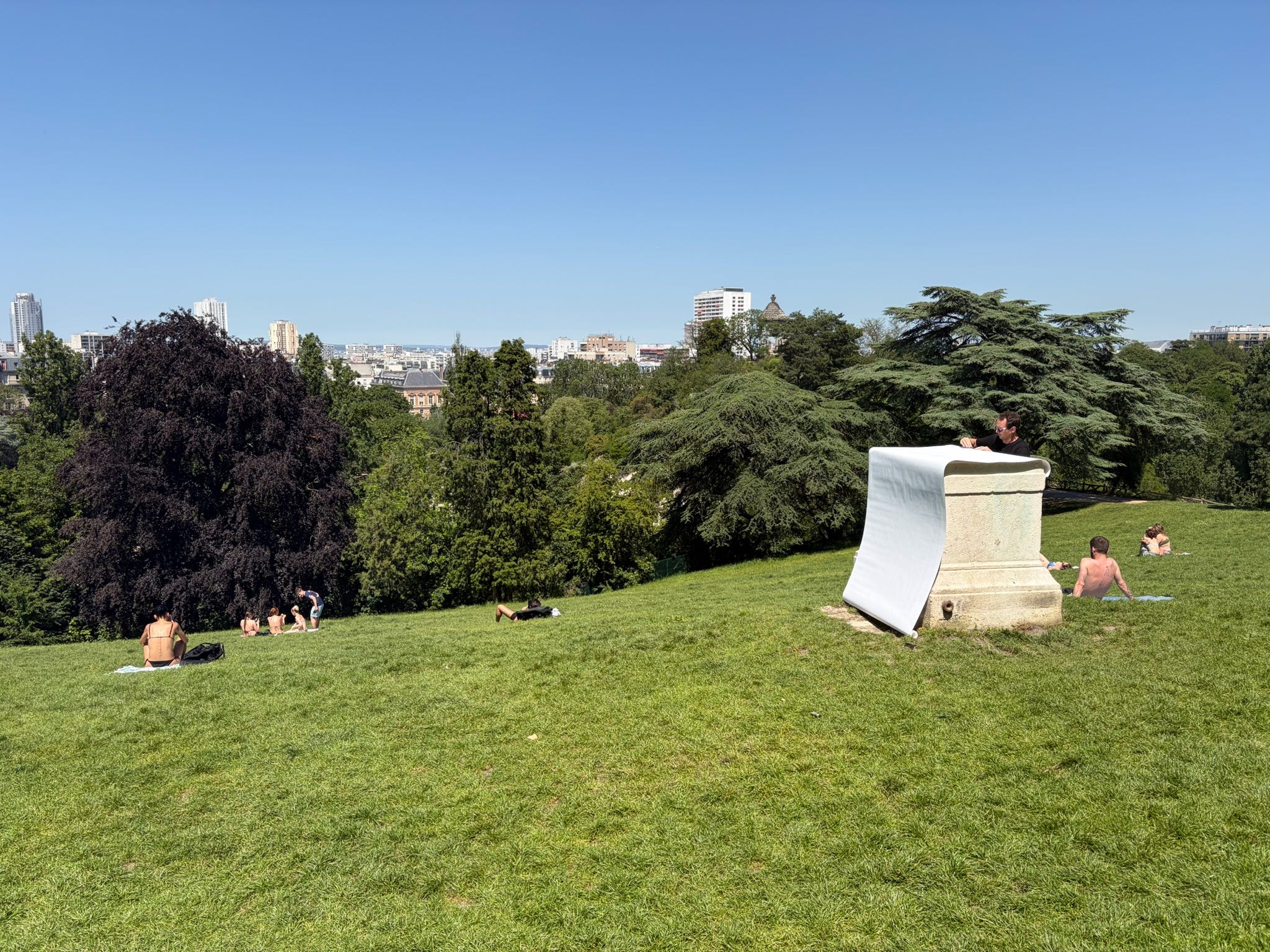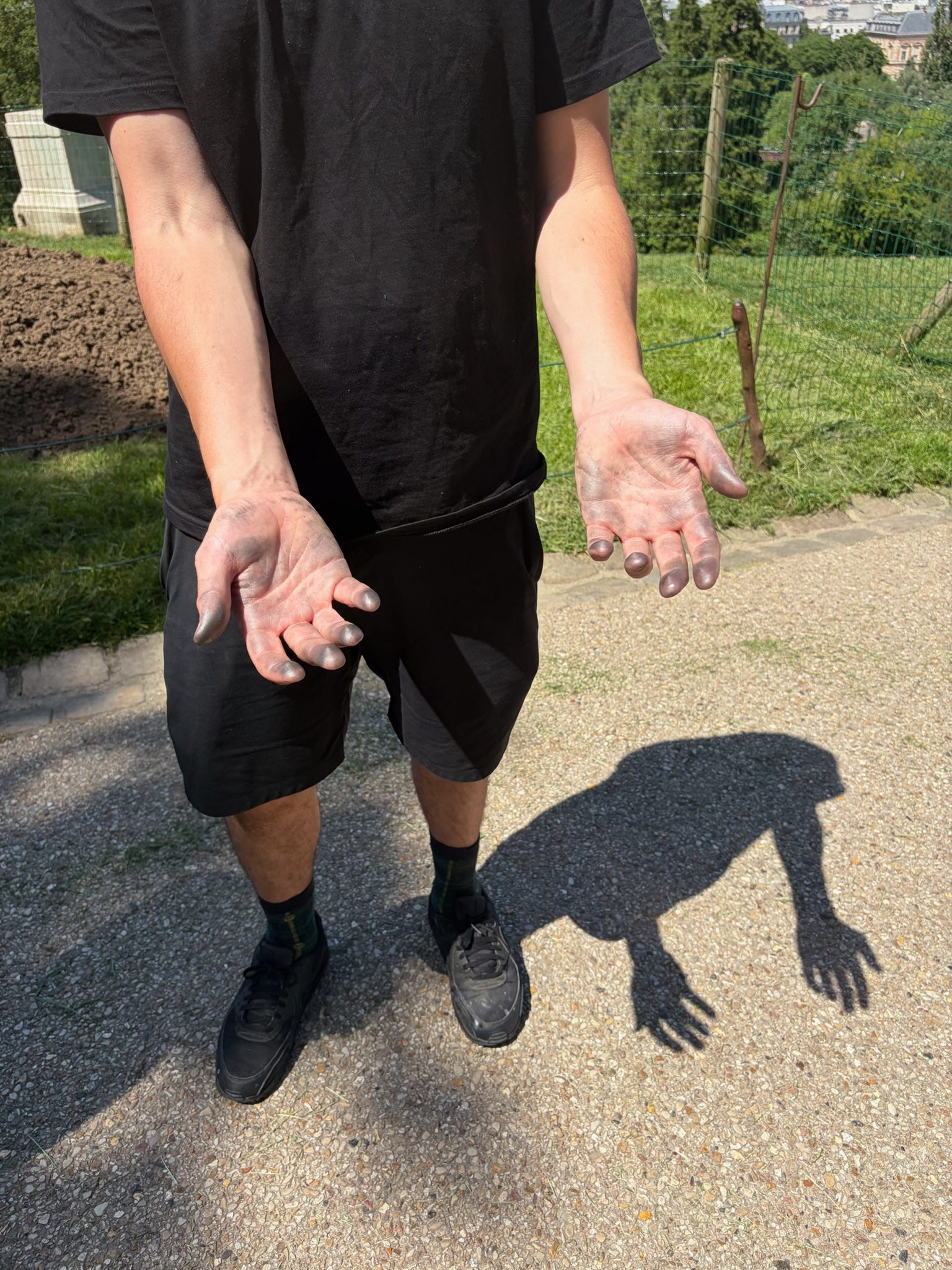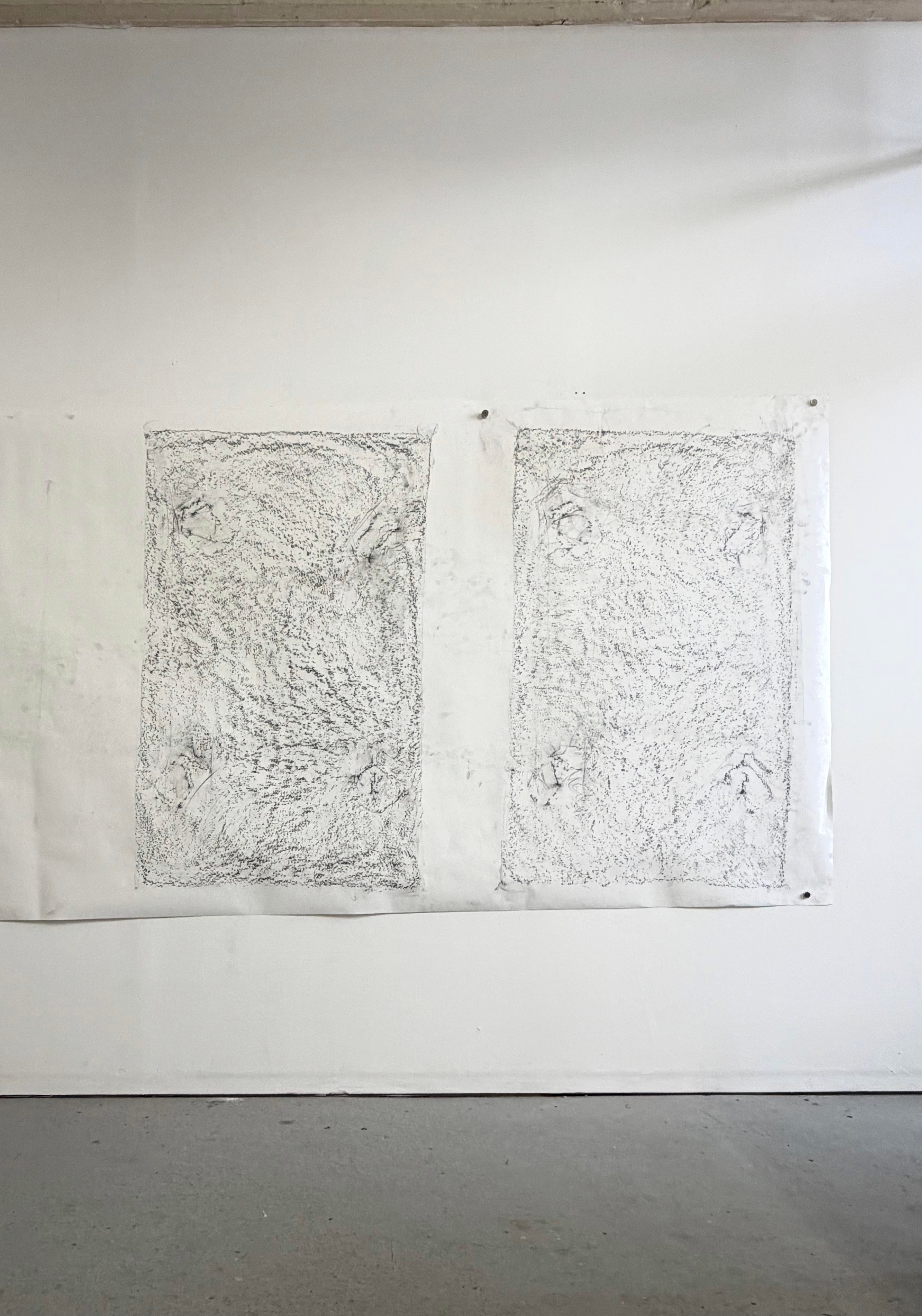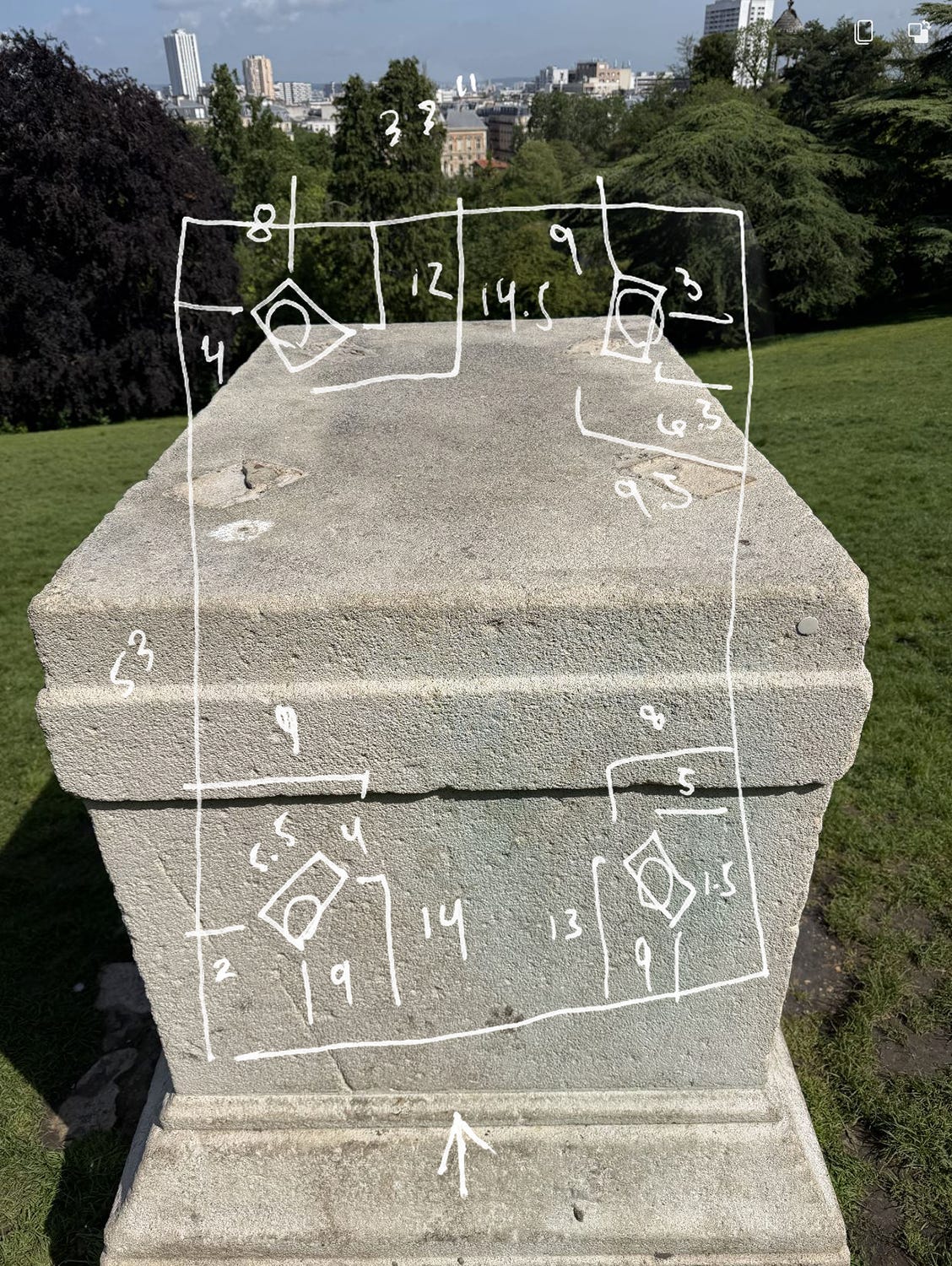
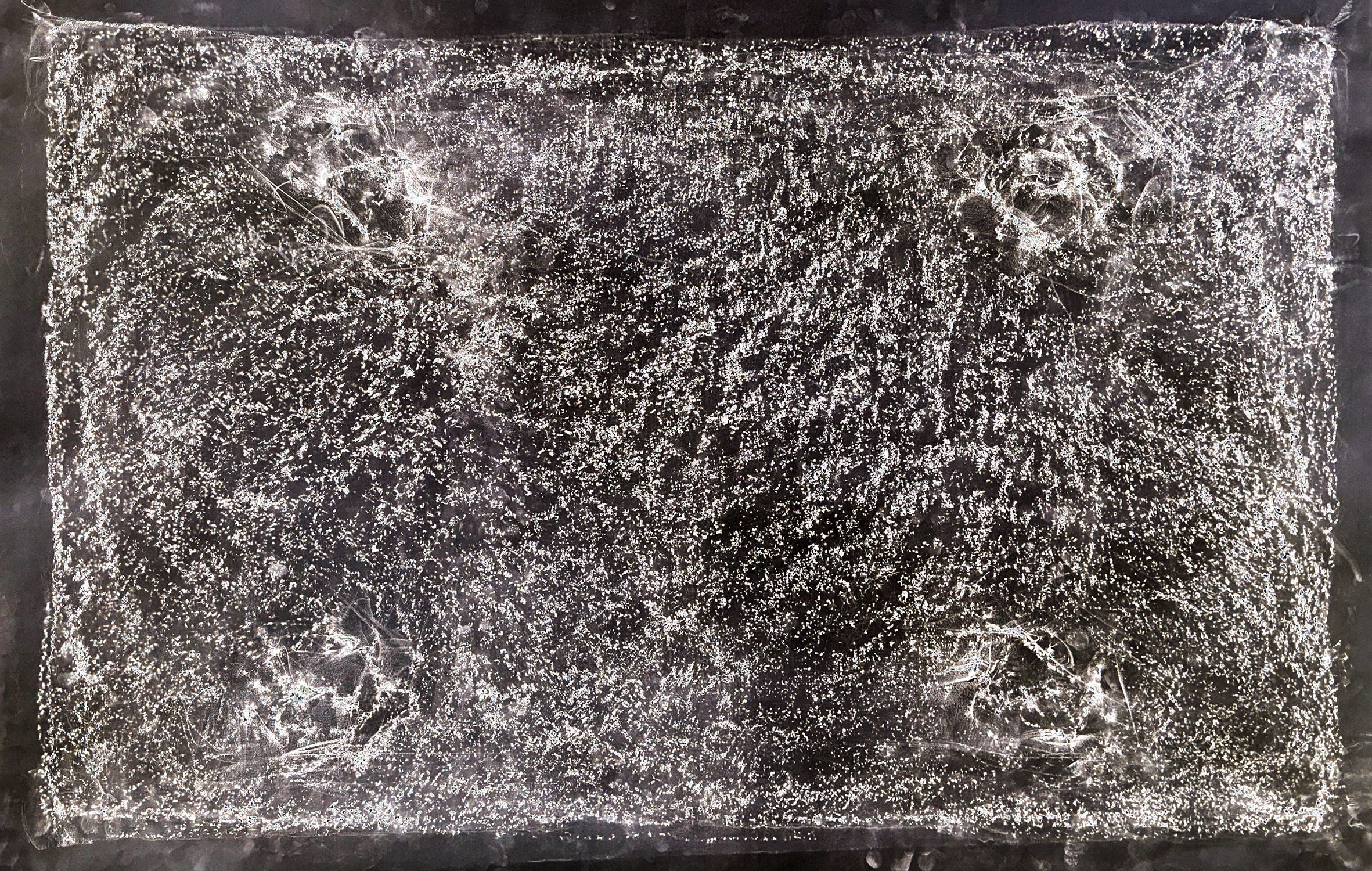
I recently was in Paris for reasons unrelated to the Au Loup!! project, however I took advantage of my time there by taking precise measurements of the pedestal. I also had the inclination to make a graphite rubbing of the plinth texture and I decided to trust the instinct and made two impressions, stacked and inverted below.
I‘ve been developing my formal proposal in accordance with French regulations. There are three different departments that need to approve the project, and each will scrutinize different elements of the proposal. Since the government goes on holiday over the summer, I’m taking this time to ensure the document is written properly to address every possible concern. I’ve also been making good progress on the engineering and fabrication strategy, more details in the future.
Since I began exploring Belleville in 2014 and subsequently found Parc des Buttes-Chaumont, I have been learning the history of the park and its crevices. Before becoming one of the 19th arrondissement’s most cherished green spaces, a dark industrial history preceded the romantic public space we know today. For hundreds of years, the park was the primary gallows where the kings of France would display the bodies of dissidents to warn the public against misbehavior. After the French Revolution, the site became a hideout for criminals and a dumping ground for horse carcasses and sewage.
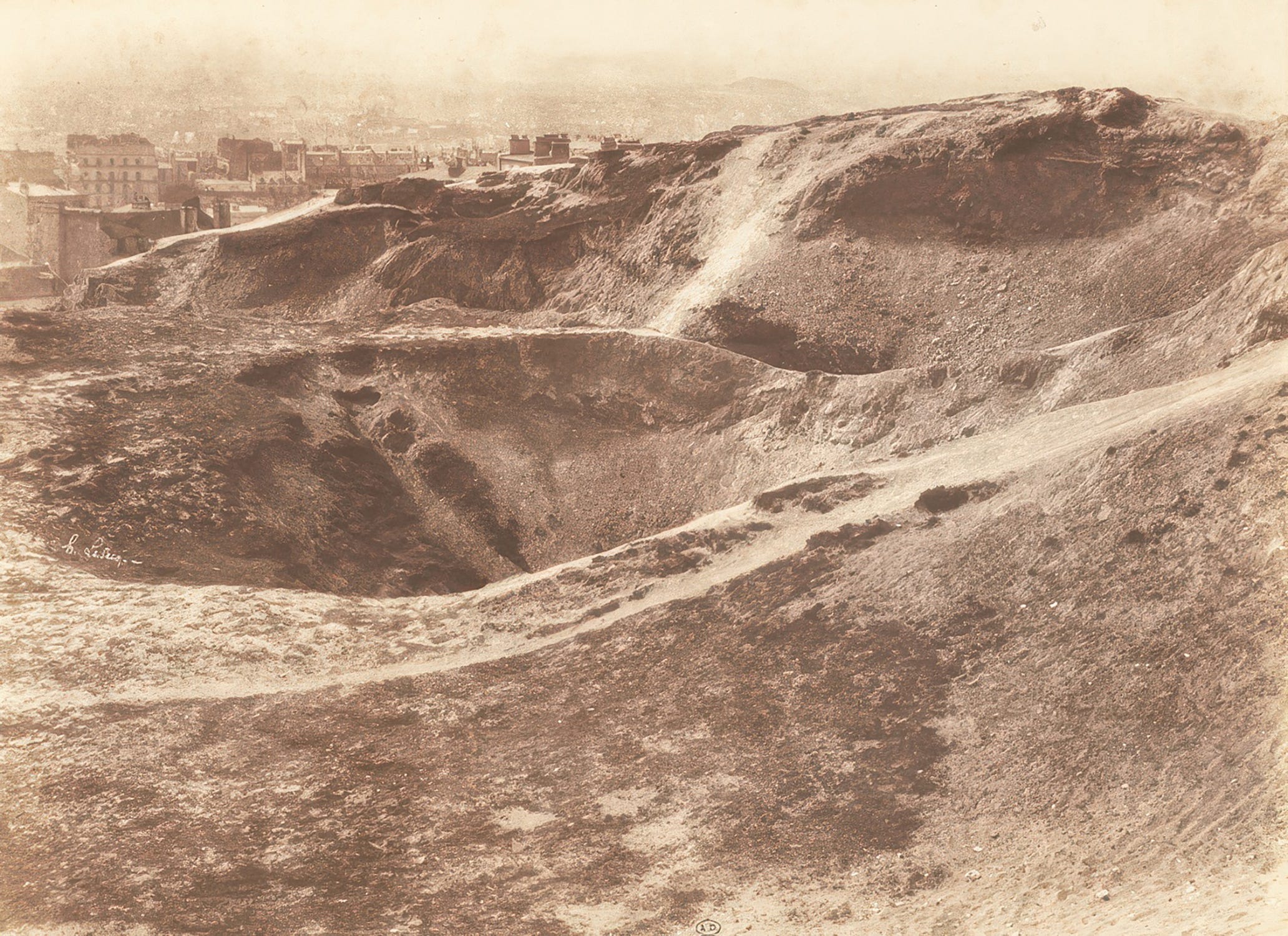
The park gets its name from Mont Chauve or bald mountain, as written in Baron Haussmann’s memoirs, for its mineral rich underground and lack of vegetation. The park was initially a quarry for gypsum which was exported to America, giving birth to the now ubiquitous term, Plaster of Paris. This detail of the park’s history is integral to my material choice of a synthetic gypsum resin, a direct reference to the early function of the land.
In 1860, Napoleon III acquired the land for the city of Paris under Haussmann’s massive urban beautification campaign. The land is too soft for architectural development, so the space was designated a park and Adolphe Alphand was chosen to redesign the barren landscape alongside the paysagiste Jean-Pierre Barillet-Deschamps. Alphand’s design embraced the rugged terrain by creating an entirely human-made landscape, following the craggy contours of the ravaged land. The park was opened in parallel to the 1867 Paris World Exhibition, after three years spent shaping the terrain using the novel material, concrete.
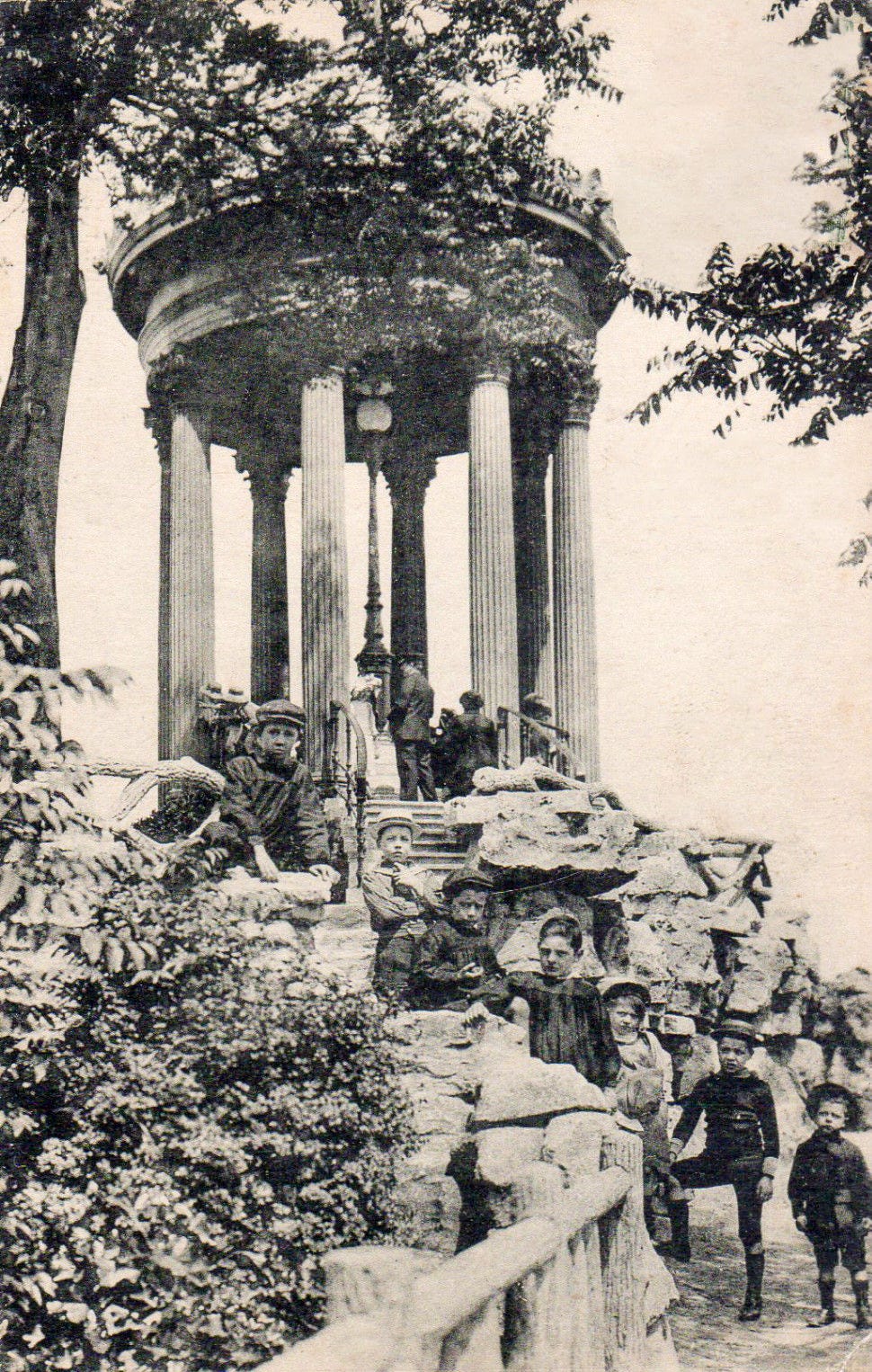
The grotto, previously the entrance to the quarry, was formed using dynamite and concrete to create a peak where the Temple de la Sibylle was built by Gabriel Davioud, also the designer of the classic benches and light-posts in Paris. Originally, there was a light-post in the center of the Temple de la Sibylle, potentially a subtle signature by the architect who conceived both.
The suspension bridge in the park was designed by none other than a young Gustave Eiffel, twenty years before his famous tower. Currently, both the Temple de la Sibylle and the suspension bridge are undergoing extensive maintenance because of the unstable gypsum foundation of the park. This is actually one of the biggest engineering concerns for my project, because the weight of the equipment needed to install the sculpture.
All elements of Parc des Buttes-Chaumont are fabricated completely by humans, standing as a testament to industrial technology while imitating sublime nature. The pathways are lined with faux-wood concrete railings and synthetic waterfalls are scattered across the top of the park, leading into a lake at the base. This idea of technology as an extension of nature is central to my sculptural thinking and pertinent to this project. My new sculpture is a digital facsimile of the original, purely hand-sculpted object. Synthetic plaster will be used to emulate real metal, creating a conceptual reference to the park’s tumultuous history of covering up a grim past with material illusions.
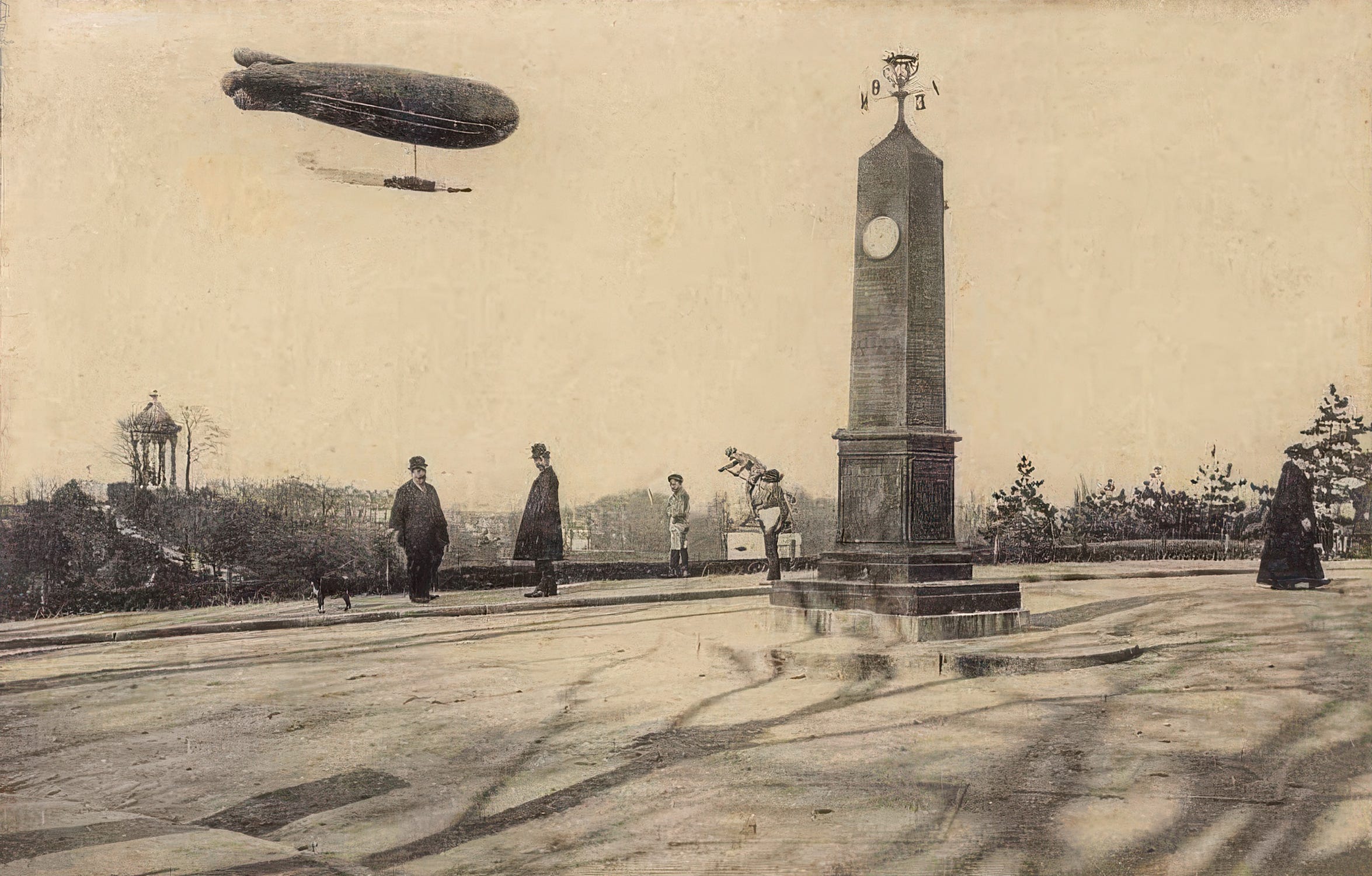
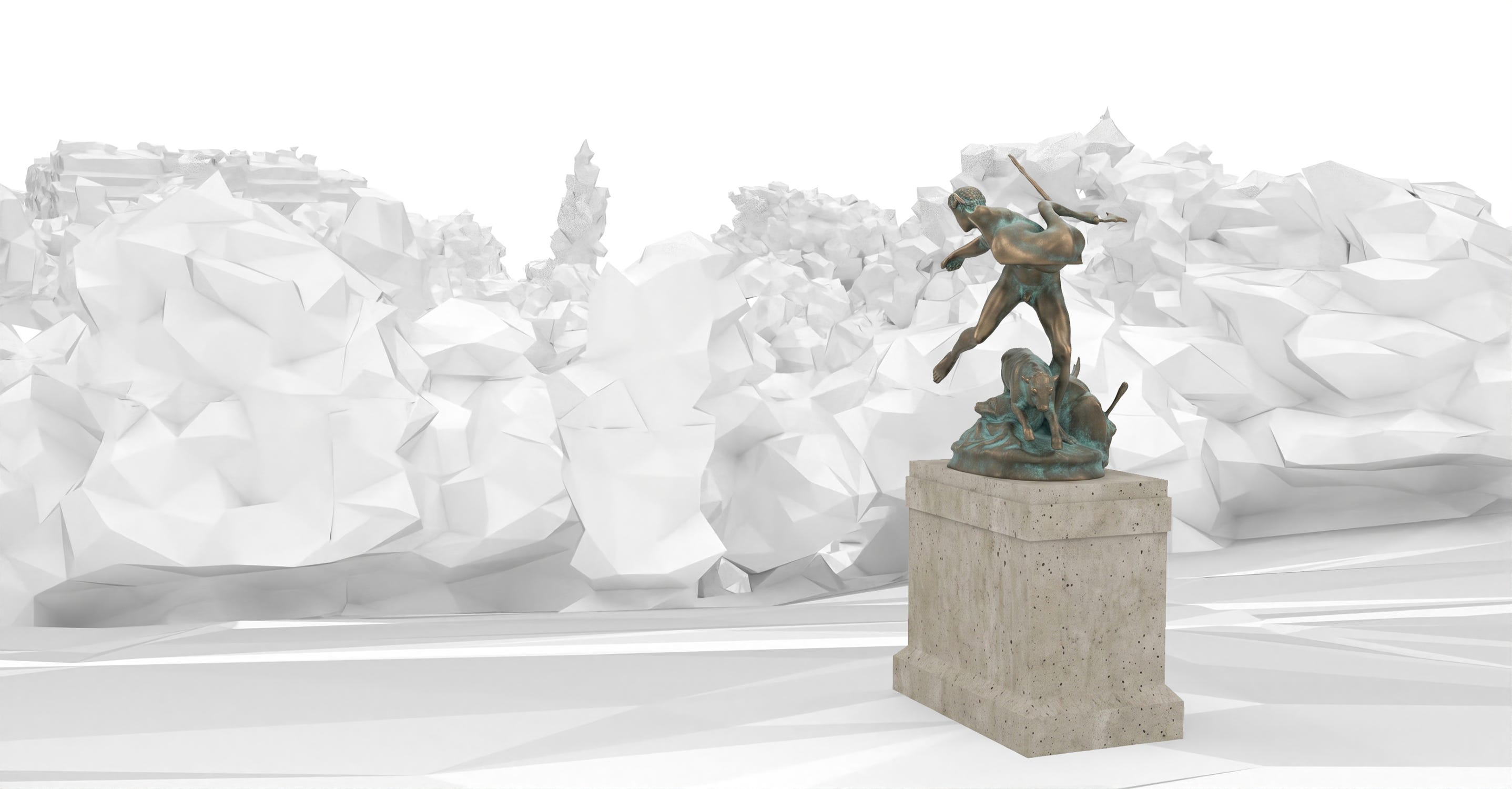
I will conclude with this surreal photo from 1908 of a blimp capturing the aerial perspective of the park, with Louis-Auguste Hiolin’s Au Loup!! still installed. To illustrate how far technology progressed in 112 years, below is an image of my conceived sculpture rendered in-situ using 3D data I extracted from Google Earth in 2020. The evolution from blimp surveys to global satellite mapping illustrates a century of progress, mirroring the history of Parc des Buttes-Chaumont, a landscape sculpted by time and technology.