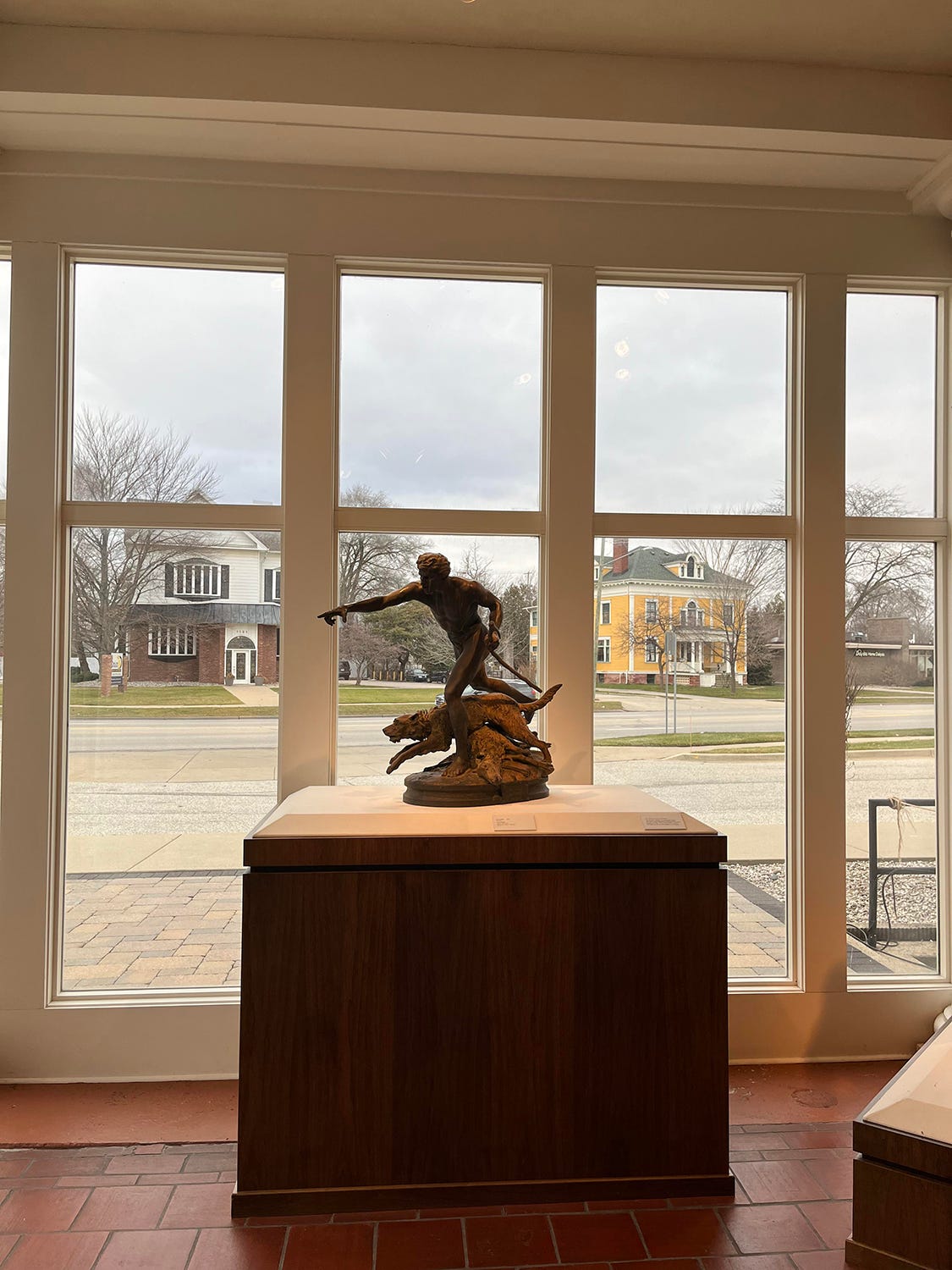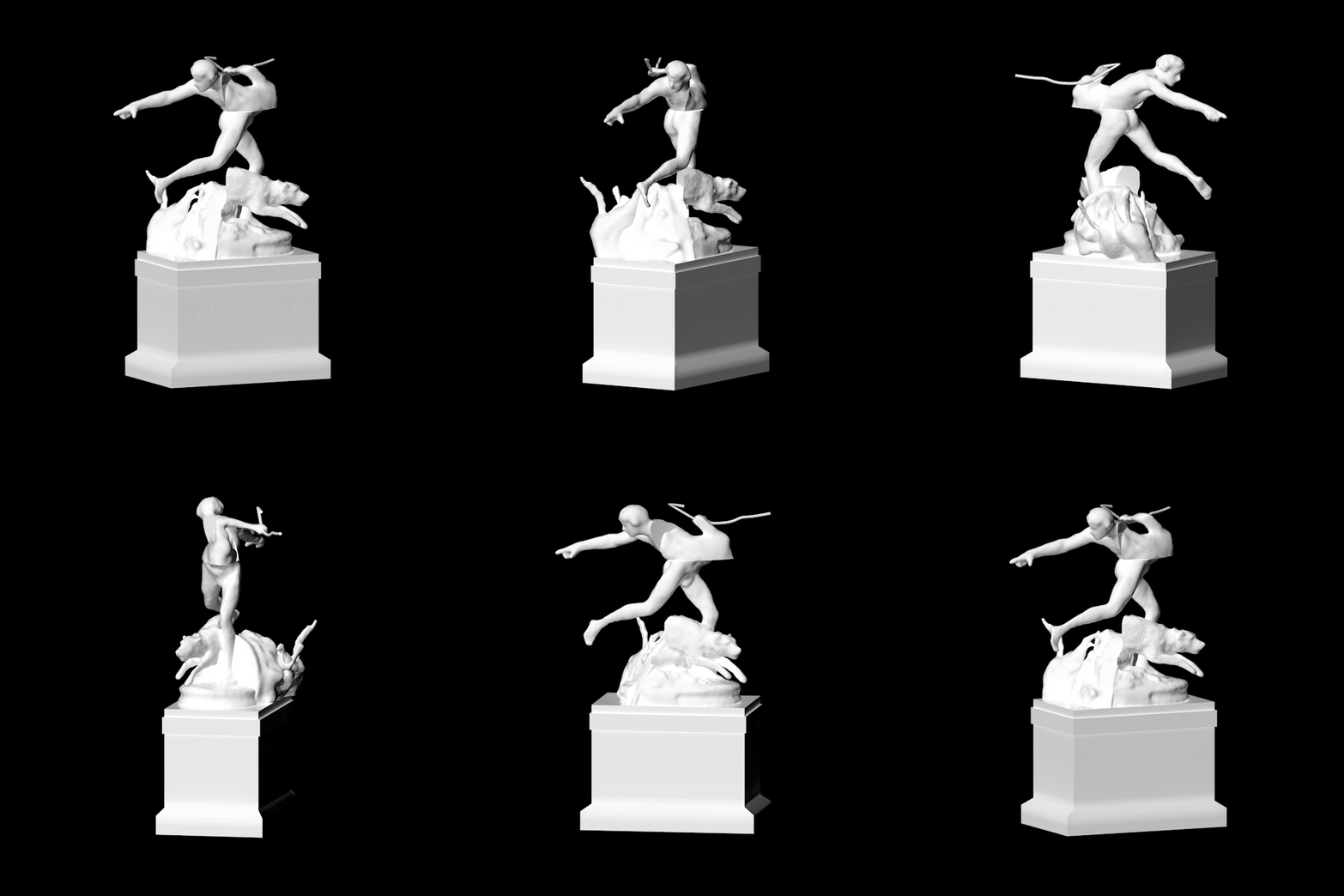
I revisited my design from 2023 created using a 3D scan I captured off a smaller edition of the original sculpture Au Loup!! by Louis-Auguste Hiolin. I debated whether to try to rescan and redesign the sculpture, but decided to trust my past self and commit to the existing design. The new sculpture was modeled using a different approach than I typically implement, including angled slices and displacing the mesh using scanned texture to accentuate the details on the animals in the composition, for example the dog’s fur. The human polygons remain simplified from the scanning process, representing the digital erosion of time. The animal details allude to the beast in human nature, recounting the history of the lost sculpture, and act as a warning not to anthropomorphize technology, otherwise humanity may become domesticated by our devices.
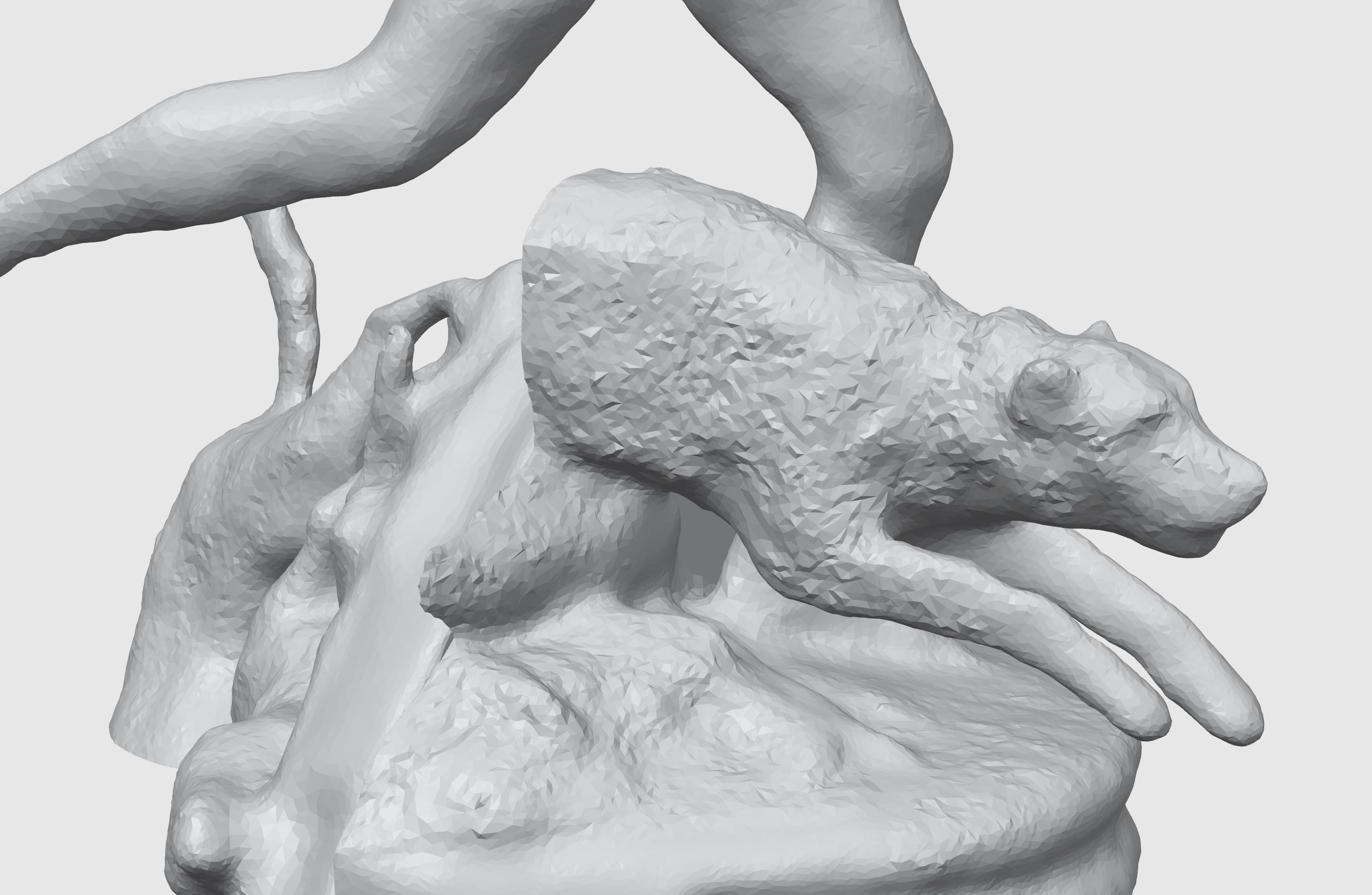
I also realized that when I took the scan of Au Loup!! in 2023, I was using an eight year old scanner and had limited mobility around the sculpture. When scaling the piece up to full scale, the vertices reveal a subtle triangle mesh pattern across the whole sculpture, my previous sculptures were not scaled large enough to notice. These facets represent the density of the 3D model, the fewer triangles, the bigger and more noticeable each becomes, similar to 2D pixels.
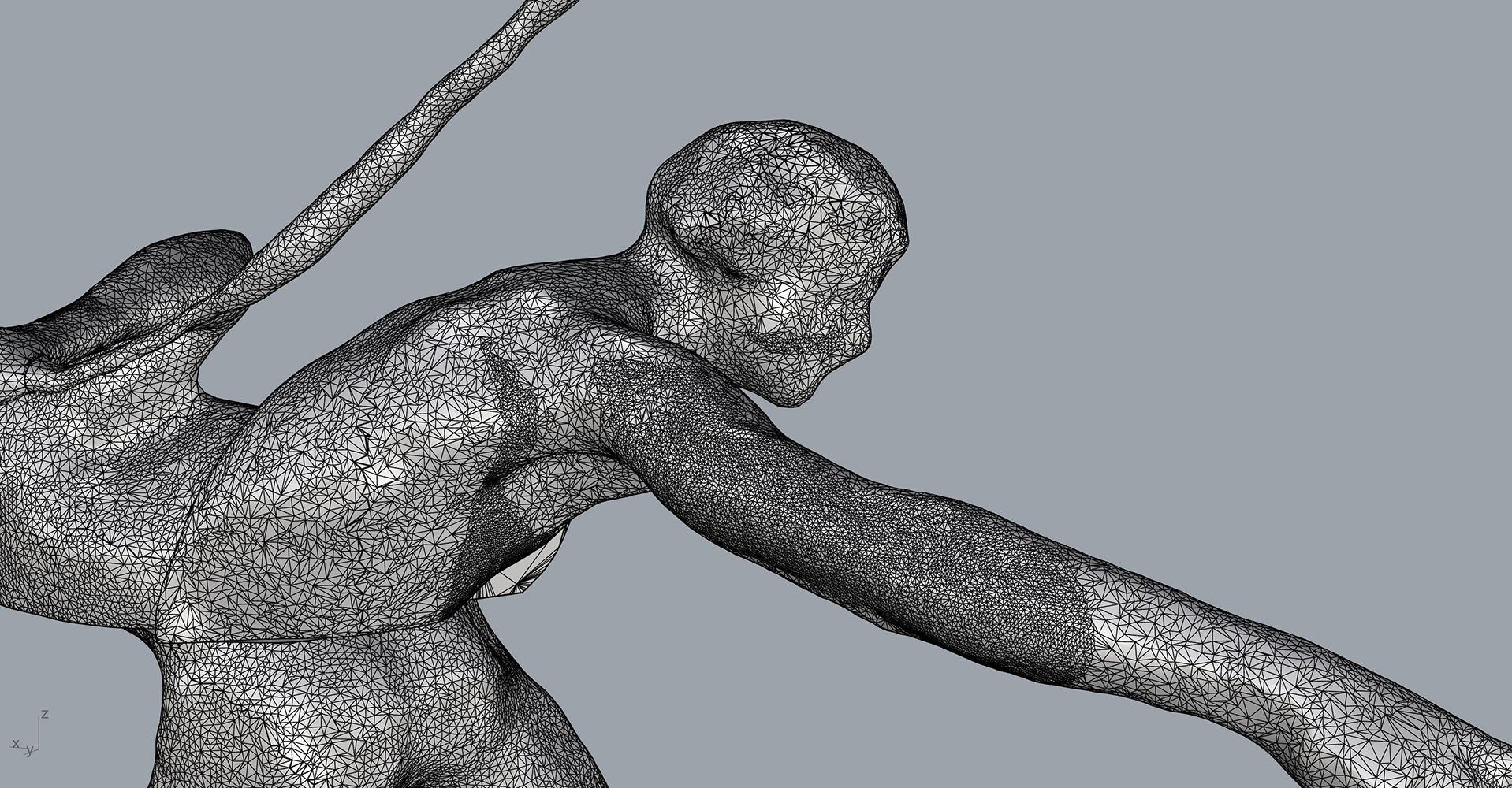
The mesh texture reveals the digitization process as an updated classical sculpture technique. My process combines hand finishing and machine texture, acting as a contemporary manifestation of the traditional mise aux points enlargement technique. The Collas machine, used for enlargements in France, was invented by the co-founder of Barbedienne, the foundry that cast the smaller commercial edition of Hiolin’s Au Loup!!. My new sculpture evolves the historic practice of industrial reproduction updated to reflect the age of computation.
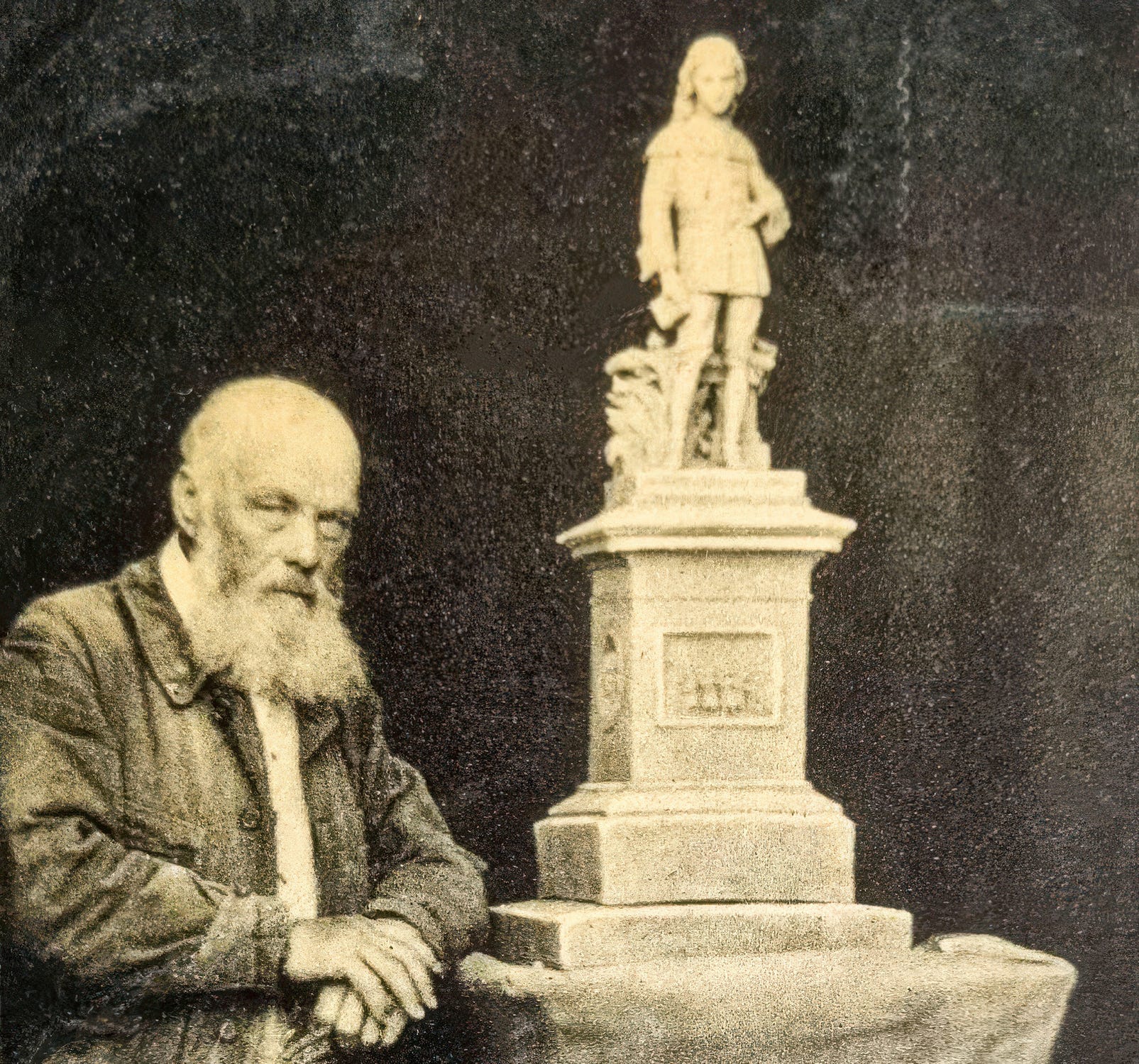
Louis Auguste Hiolin was born March 18, 1846, in Aisne, France. He moved to Paris in 1864 to pursue his artistic training, studying at the prestigious École des Beaux-Arts. Hiolin’s early career was interrupted by the Franco-Prussian War in 1870, during which he was taken prisoner. Upon his release and return to France, he completed his academic training and cultivated his sculptural practice, creating public monuments. The sculpture that my public intervention is based on, titled Au Loup!!, was Hiolin’s claim to fame. The full-scale plaster version of the piece won acclaim at the 1885 Paris Salon exhibition and it was promptly acquired by the city of Paris and cast in bronze. The monument was mounted atop Parc des Buttes-Chaumont in 1888, although critics claimed the piece lost some of its allure when translated into bronze.
During the Second World War, non-ferrous metal sculptures across Paris were seized and melted for war efforts by the Vichy regime in 1942. Thirty-two years after Hiolin’s death in 1910, Au Loup!! was sent to the foundries, one of many casualties from Parc des Buttes-Chaumont. The destroyed sculptures were selected by a committee that walked Parisian parks choosing artistic expression to destroy as part of the mobilization of non-ferrous metals campaign, while leaving only monuments of undeniable national glory, often rulers.
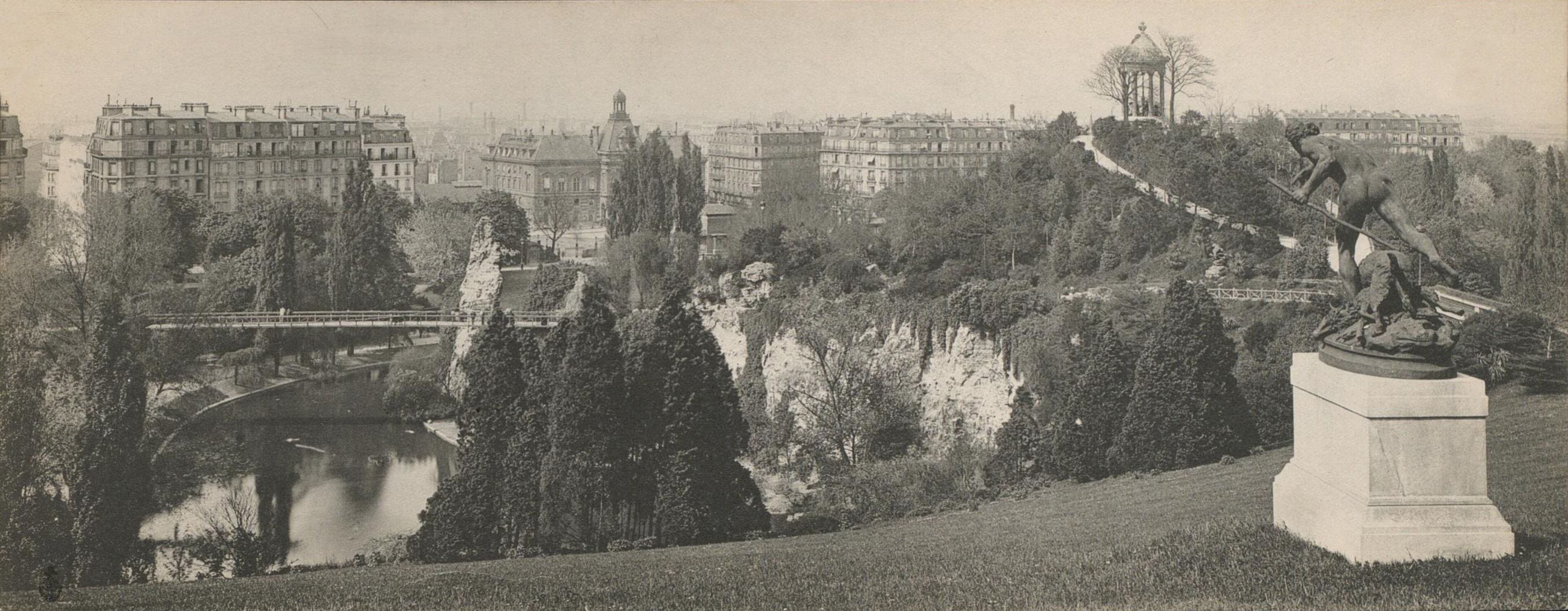
For historical context, Hiolin was working while Impressionism was in full force. In some sense, he was stuck in the traditional ways while modernity passed him by. Monet and Rodin were in Paris at the same time, creating icons of art history. The modernist avant-garde would have considered public monuments like Hiolin’s to be government propaganda. Ironically, the tradition the modernists rejected was sacrificed, while degenerate art endured.
Straddled between academic tradition and the birth of modernism, Hiolin’s original composition was lost to the machine of war. By updating his work through the lenses of digital fabrication, my goal is to create symbiosis between the handmade past and our digitized future.